
Laparoscopic Ovarian Drilling in PCMC, Pune - Srushti Hospital and IVF Center
Searching for laparoscopic ovarian drilling near me in PCMC or Pune? Srushti Hospital and IVF Center is on Dange Chowk Road in Thergaon, reachable from Wakad, Dange Chowk and across Pimpri-Chinchwad. Srushti Hospital and IVF Center provides the facility for consultation, procedure and follow-up under Dr. Nikhil A. Mahadar, gynecologist in PCMC, at a single location.
Srushti Hospital and IVF Center in Thergaon, PCMC, offers laparoscopic ovarian drilling under Dr. Nikhil A. Mahadar, gynecologist in PCMC, to help restore ovulation in PCOS-related infertility when ovulation induction medication has not worked.
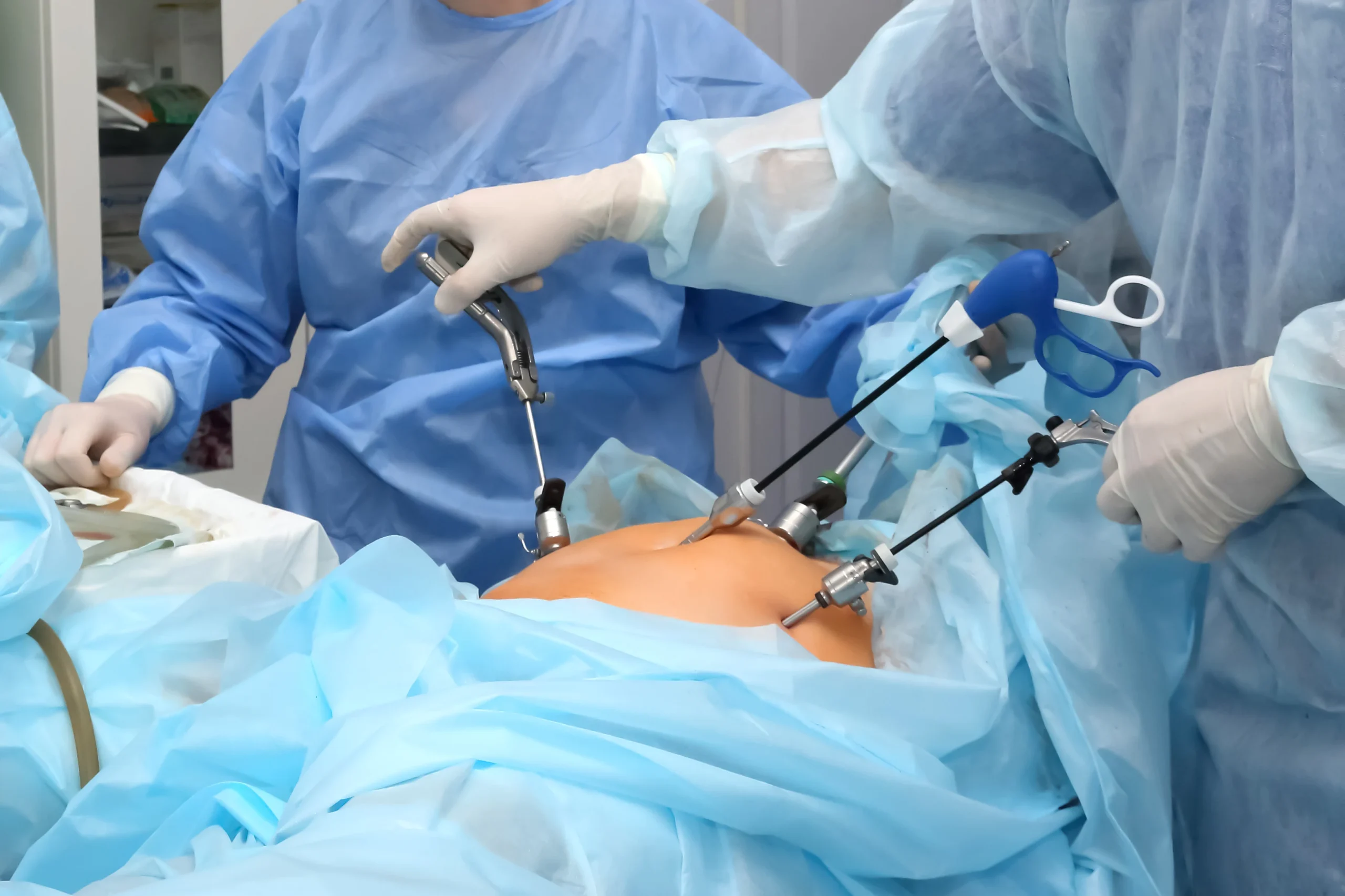
What Is Laparoscopic Ovarian Drilling?
Laparoscopic ovarian drilling is a minimally invasive surgical procedure used to treat infertility caused by polycystic ovary syndrome (PCOS), generally when ovulation induction medication has not restored regular ovulation on its own. A small number of punctures are made in each ovary using heat or laser energy, delivered through fine instruments passed via small abdominal incisions.
As a gynecologist in PCMC fellowship-trained in both laparoscopic surgery and infertility, Dr. Nikhil A. Mahadar considers this option specifically for PCOS-related infertility that has not responded to first-line medication.
How Does Ovarian Drilling Help With PCOS?
Ovaries affected by PCOS generally contain excess androgen-producing tissue, which can interfere with normal ovulation. Reducing a small amount of this tissue through drilling can help lower androgen levels, which may allow the body’s own hormonal signalling to restore more regular ovulation. This is a mechanical and hormonal effect, not simply a mechanical unblocking of the ovary.
Contact Us
When Is Ovarian Drilling Recommended?
- PCOS-related infertility where ovulation induction medication, such as clomiphene or letrozole, has not been successful
- Clomiphene-resistant PCOS specifically
- Situations where injectable ovulation induction medication would carry a higher risk of multiple pregnancy or ovarian hyperstimulation
- Sometimes performed alongside a diagnostic laparoscopy already planned for another reason
Ovarian drilling is generally not the first option offered for PCOS-related infertility. Dr. Mahadar discusses this as a specific next step once simpler treatments have been tried, not as a routine starting point.
Ovarian Drilling vs Ovulation Induction Medication
- Ovulation induction medication. Generally tried first, taken over one or more cycles. Effective for many women with PCOS-related infertility.
- Laparoscopic ovarian drilling. Considered when medication alone has not worked, offering a one-time procedure rather than ongoing monthly treatment, with a lower risk of multiple pregnancy than injectable medication.
Dr. Mahadar discusses which path fits your specific situation, since not every patient needs to reach the point of considering surgery.
Step-by-Step Laparoscopic Ovarian Drilling Procedure
Here is how this procedure generally proceeds under Dr. Nikhil A. Mahadar, gynecologist in PCMC.
Before Your Ovarian Drilling Procedure
01. Anaesthesia.
You are given general anaesthesia and monitored by the anaesthesia team throughout the procedure.
02. Positioning and preparation.
You are positioned appropriately. The abdomen is cleaned and prepared.
During the Ovarian Drilling Procedure
03. Creating laparoscopic access.
A small incision near the navel is used to gently inflate the abdomen with carbon dioxide gas. The laparoscope is then inserted to view the ovaries.
04. Additional port placement.
A small number of additional small incisions are made to insert the drilling instrument.
05. Examining the ovaries.
Dr. Mahadar examines both ovaries to confirm the plan before proceeding.
06. Performing the drilling.
A limited number of small punctures are made into the surface of each ovary using heat or laser energy, aiming to reduce androgen-producing tissue without removing healthy ovarian reserve unnecessarily.
After Your Ovarian Drilling Procedure
07. Final checks and closing.
The surgical site is checked for bleeding, instruments and gas are removed, then the small incisions are closed.
The procedure itself generally takes about 30 to 45 minutes, depending on individual findings. This is a general range, not a specific time promised for every case.
What Are the Risks of Ovarian Drilling?
This procedure is generally safe, but as with any surgery it carries risks such as infection, bleeding and, uncommonly, the formation of pelvic adhesions afterward. There is also a risk that treating too much ovarian tissue could reduce ovarian reserve, which is why Dr. Mahadar limits the number of punctures made per ovary.
The effect on ovulation is not guaranteed to be permanent for every patient. Some women may need further treatment later.
Benefits of Laparoscopic Ovarian Drilling
- Can restore natural ovulation. Without needing ongoing monthly medication.
- Lower multiple pregnancy risk. Generally lower than injectable ovulation induction medication.
- A one-time procedure. Rather than repeated medicated cycles.
- Can be combined with diagnostic laparoscopy. If a broader pelvic evaluation is already needed.
Does Ovarian Drilling Guarantee Pregnancy?
No. Ovarian drilling aims to restore more regular ovulation, which improves the chance of conceiving for many women with PCOS-related infertility, but it does not guarantee pregnancy. If it is not successful, IUI or IVF generally remain available as further options. Dr. Mahadar discusses realistic expectations for your specific situation.
Recovering After Laparoscopic Ovarian Drilling
- Hospital stay. Generally the same day or one night.
- First few days. Mild cramping or shoulder discomfort from the gas used during laparoscopy can occur and generally settles quickly.
- Return to normal activity. Most patients resume normal activities within a few days to a week.
- Follow-up. To monitor ovulation and discuss next steps for conceiving.
Why Choose Srushti Hospital for Laparoscopic Ovarian Drilling
- Dual fellowship training. Dr. Mahadar holds fellowship training in both laparoscopic surgery and infertility, directly relevant to this procedure.
- Honest treatment sequencing. A clear explanation of where drilling fits relative to medication and other fertility treatments, not a rush to surgery
- Continuity into further fertility care. The same doctor manages any IUI or IVF treatment that may follow.
- Reasonable, transparent pricing. A flat ₹500 consultation fee, with procedure costs discussed and confirmed in advance.
Frequently Asked Questions
Rather than a single answer, look for a doctor with fellowship training in both laparoscopic surgery and infertility, who positions drilling honestly as a second-line option rather than a first recommendation and who manages the fertility treatment that follows. Dr. Nikhil A. Mahadar at Srushti Hospital and IVF Center in Thergaon offers all three.
A minimally invasive surgical procedure that makes a small number of punctures in the ovaries to help restore ovulation in PCOS-related infertility, generally after medication alone has not worked.
No. Ovulation induction medication is generally tried first. Drilling is considered when medication has not been successful.
No. It helps restore ovulation for many women with PCOS-related infertility, but results vary. It does not guarantee pregnancy.
It carries a lower risk of multiple pregnancy than injectable ovulation induction medication, though it has its own surgical risks. Dr. Mahadar discusses which option fits your specific situation.
It varies by individual. Some women see a lasting improvement in ovulation, while others may need further treatment later.
Possibly, if drilling does not lead to pregnancy. It is one step in a broader fertility treatment path, not necessarily the final one.
Become a Member
Serving Thergaon, Dange Chowk, Wakad and Pimpri-Chinchwad
Shop No 19, 19A, 20, Ground Floor, Metropole Building, Dange Chowk Road, opposite Runwal Heritage, Thergaon, Pimpri-Chinchwad, Maharashtra 411033
6:30 PM to 9:30 PM, Monday to Saturday
Morning consultation, by appointment: 9:00 AM to 11:00 AM, Monday to Sunday
7798019692 / 9075993329
₹500 per visit